The Birth of Ave Maria Grotto
For 46 years, from the age of 14, a German born man labored shoveling coal at the monastery in Cullman, Alabama. He didn’t come to Alabama to shovel coal, he came to become a priest. Through a series of serious accidents, his plans changed and he decided to stay and become a monk instead. His daily monastic tasks included prayer and shoveling the coal. For 46 years.
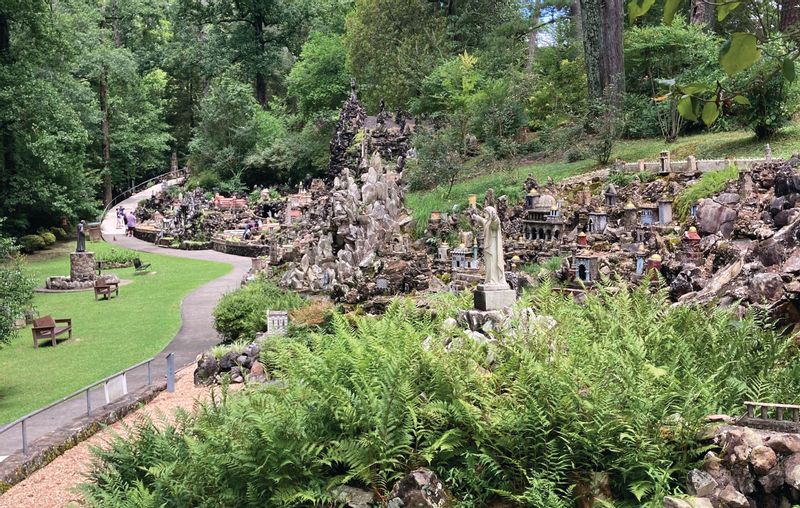
Around the age of 34, Brother Joseph Zoetl, a slight hunchback from one of the accidents, started building fantastical tiny scenes made of everyday items. When donated items broke or cracked, Brother Joseph used them to create a world reminiscent of Mr. Roger’s Neighborhood, though his scenes were made up of famous historical sites from all over the world. Places like the Pantheon, Italian basilicas and temples, an Egyptian pyramid, the Great Wall of China and the hanging gardens of Babylon (an ancient wonder of the world) are present along the short pathway. There are models of castles, churches and other monasteries around the world. There are truly moving models that honor students from the school there who were killed in Korea, Vietnam and World War II, as well as a model of a church in Japan dedicated to world peace after the atomic bomb. Overall there are 125 tiny models. “A world in miniature” they call it. Where Brother Joseph could not visit physically, he could imagine the places and spaces in his mind, and then visit with his creative hands, inviting others on an imaginative journey with him.
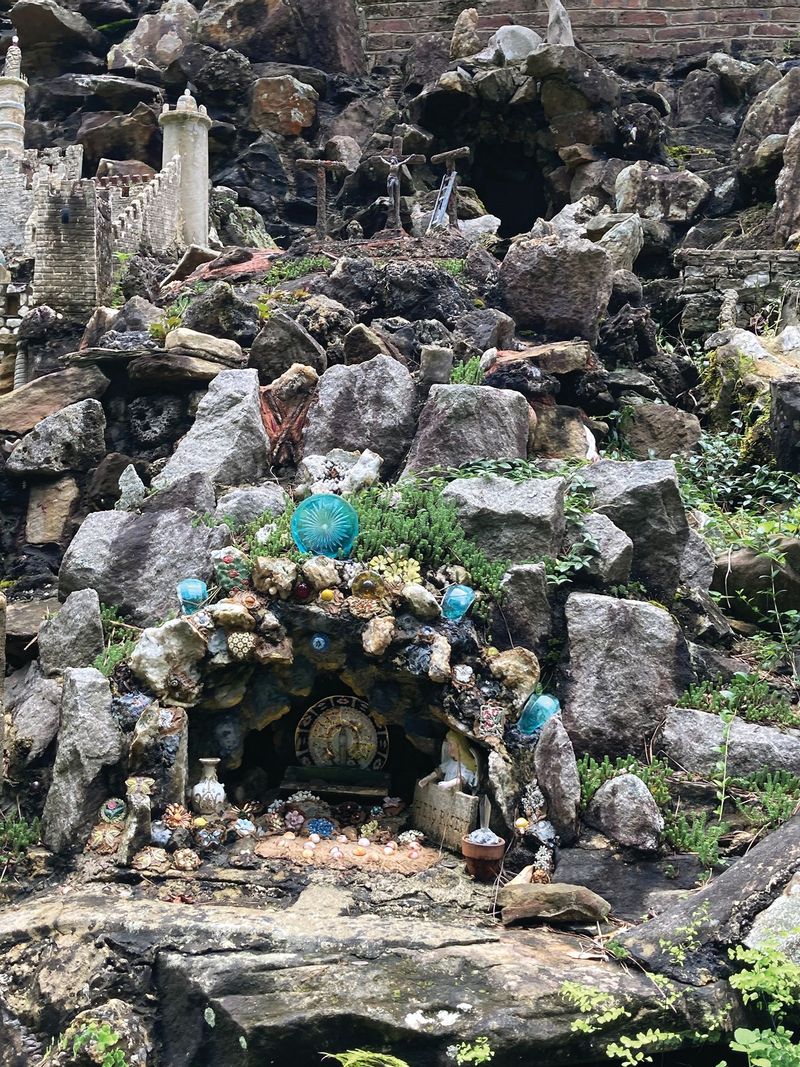
While the art and scope of his projects are truly amazing, what may be most inspiring is the City of Jerusalem, and the locations and scenes from some of the most beloved stories of Jesus' life.
There is the entrance to Jerusalem, through the Gate of Herod, where Jesus himself would have entered, on a donkey, celebrated as Palm Sunday. There is a temple where many of Jesus' teachings came from, including a moment where he tossed tables aside in disgust at the misuse of the temple, as well as the treatment of the poor. There is the tomb where Lazarus was buried, where Jesus wept and then raised one of his best friends from the dead. There is the Pool of Bethsaida, where Jesus compassionately healed a man crippled from birth. There is the garden where he sweated blood before his arrest. There's the headquarters of Pilate where Jesus was handed his death sentence. On the hill are the three tiny crosses, where Jesus was executed next to criminals. And there's Joseph's tomb where Jesus was laid to rest and later his friend Mary found the tomb empty.
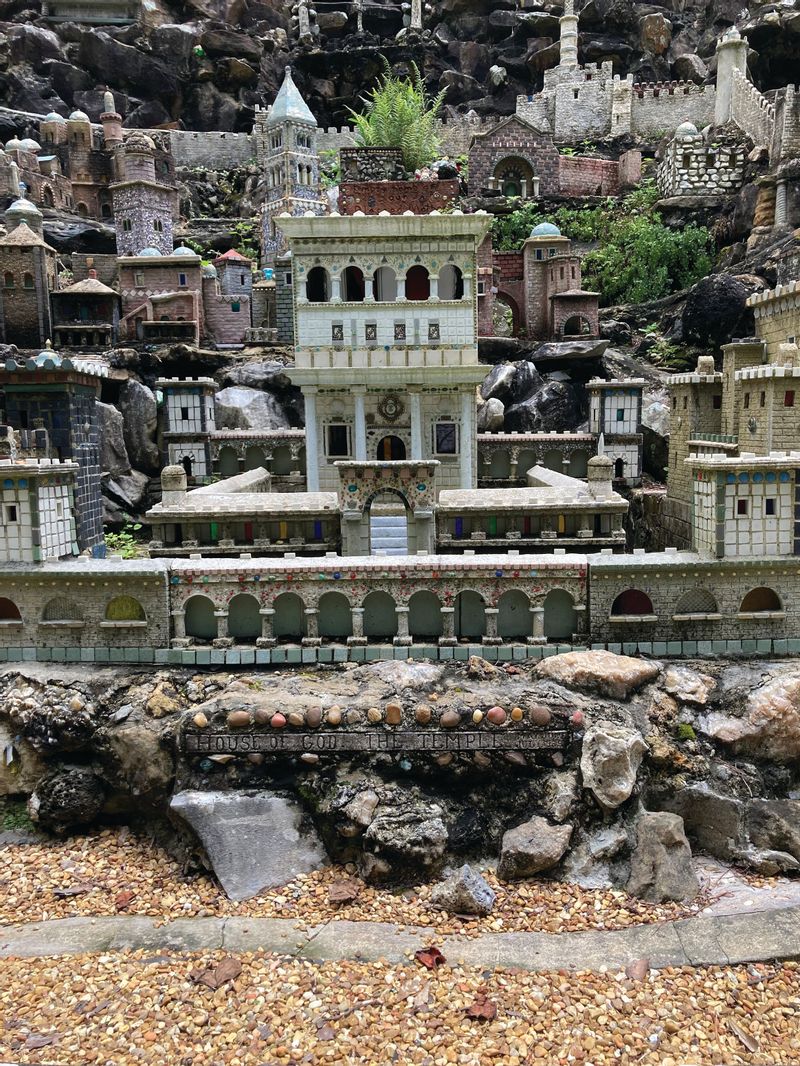
The entire city is built into the hillside, with so many beautiful intricate details laid out for one to walk with their eyes and to experience the familiar stories in their heart. Jesus was quite the storyteller. I wonder if Brother Joseph saw himself as a storyteller as well.
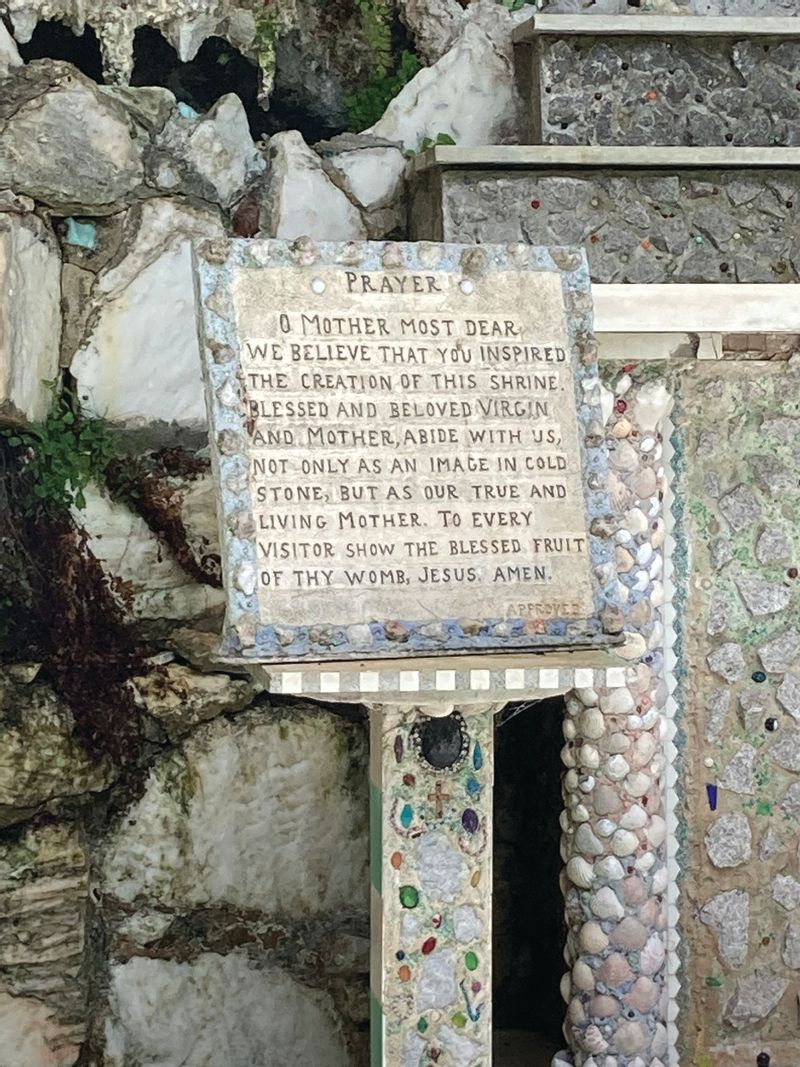
Many of the installations are made of broken glass, jewelry, china, seashells, tile, beads, marbles, even railroad spikes and chicken wire. Trash to magnificent treasure. Splashes of plants and flowers and trailing vines work their way through the tiny cities and monuments and stories.
What started as small homages to Mary, the mother of Jesus, grew into something quite wonderful for all to behold and experience.
Maybe the monk himself felt at times unseen, laboring away in the background. While he never sought the spotlight or wanted to be known for his artwork, his hobby now tells his beautiful story, from servant in the background to masterful storyteller with lasting creations for all to enjoy.
The Ave Maria Grotto (grotto is Italian for cave) is available for all to experience at St. Bernard Abbey in Cullman, Alabama and is a wonderful day trip. For more information visit www.avemariagrotto.com.