From Planted Seed to Luxury Sheets
On roughly 3,000 acres of North Alabama farmland, Red Land Cotton grows much of the cotton that will eventually become sheets, towels and home goods. The journey from field to finished product is rooted in family, American craftsmanship and a mission the company has had to fight to protect.
By Kelly Caldwell
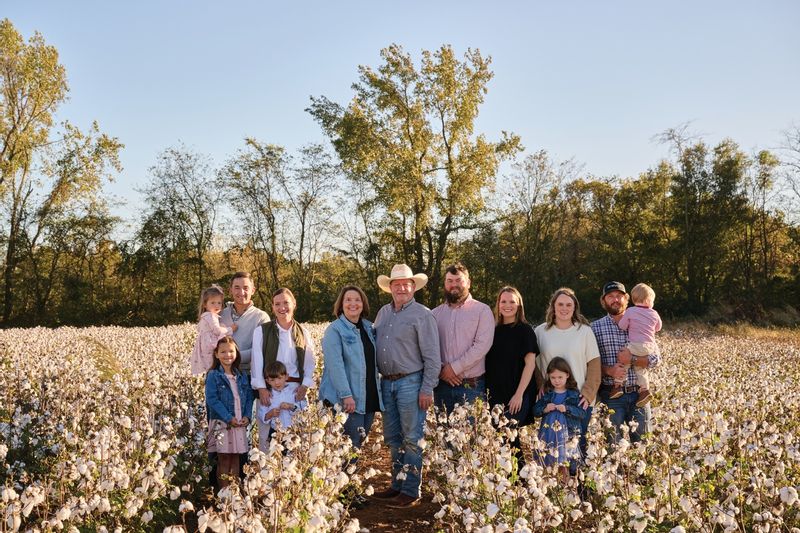
The First Sheets
Then came the first fabric.
After months of research and imagining what their own Alabama cotton might become, the Yeager family finally had material in hand. Rather than wait for a polished product launch, the fabric was taken home and sewn into a set of sheets, and Mark Yeager and his wife slept on them that night.
It was a simple beginning for what would become a nationally recognized home brand. Before full collections, warehouses and customers across the country, there was one set of sheets and a family eager to experience what they had created. For the first time, cotton that had begun in their own fields had completed the journey from crop to cloth to something useful in their own home.
The seed-to-sheet story was no longer a concept. It was real.
Following the Cotton
Today, that journey is larger and more sophisticated, but it still begins in the fields of North Alabama.
“They plant the cotton crop in April, as soon as they feel like there isn’t going to be a frost again,” Brakefield said. “Seed goes in the ground in April, summer is its growing season, and then we harvest the cotton in late September, early October.”
Weather still plays a role, and farming never becomes entirely predictable, but October brings one of the prettiest parts of the process.
“Definitely in October, the blooms are open,” Brakefield said. “It’s so pretty.”
After harvest, the cotton is ginned at the family’s cotton gin in late October and November. From there, it moves through a network of American manufacturers.
“From there it goes to Parkdale Mills to be spun into yarn, specifically for the sheets,” Brakefield said.
The yarn then travels to Hamrick Mills in Gaffney, South Carolina, where it is woven into what the textile industry calls a greige good, essentially raw, unfinished fabric. That fabric then moves to finishing facilities, where it may be bleached, dyed, colored or printed.
“We have suppliers all over the United States, ranging from New Jersey to Illinois, who are finishing for us,” Brakefield said.
The finished rolls then move to cut-and-sew operations in Alabama and Mississippi, where the fabric becomes sheets, duvet covers, shams, tea towels, bags, aprons and other products.
“Anything that we can think of,” Brakefield said.
Only then does the finished product arrive at the Red Land Cotton warehouse and begin the final leg of its journey into homes across the country.
It is a long way from an April planting to a freshly made bed, and that is part of what gives the finished product its meaning.
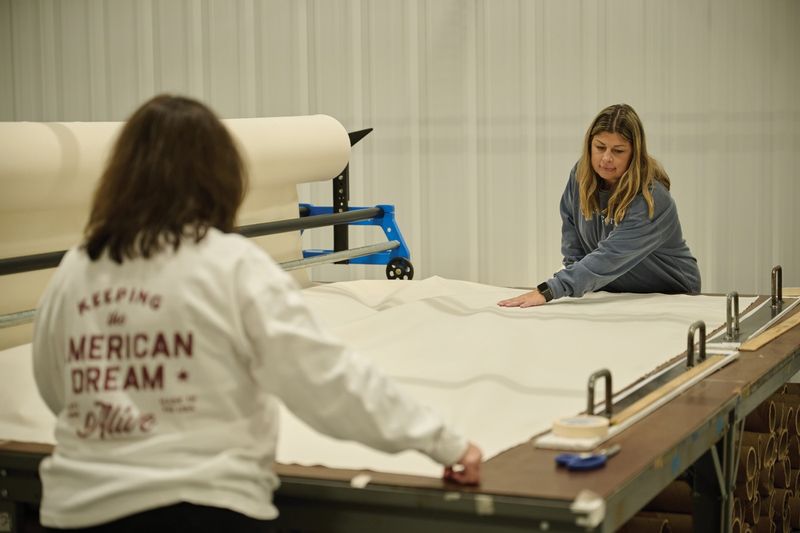
A Different Definition of Luxury
Ask Brakefield what transforms raw cotton into a luxury product, and she does not begin with thread count, price or packaging.
“What I think makes it a luxury product is the care and attention to detail that goes into it,” she said. “The truly intimate supply chain that we manage is what really sets these goods apart.”
That word, intimate, helps explain Red Land Cotton better than luxury alone ever could. The company knows where much of its cotton was planted, where it was ginned, where the yarn was spun, where the fabric was woven and finished, and where the final pieces were cut and sewn.
There are people behind every step. Farmers, gin workers, mill employees, finishers, sewing professionals and warehouse teams all play a role in getting a finished set of sheets into one bedroom.
For Red Land Cotton, that connection is part of the value. Luxury is not simply about indulgence. It is about knowing what went into making something and understanding the people and places behind it.
Made Like They Used to Be
For all the modern logistics involved in producing Red Land Cotton products, some of the company’s inspiration reaches back more than a century.
The weave used for its sheets was developed from an actual bedsheet dating to the 1920s.
“I think that the weave is unique, but it’s not proprietary,” Brakefield said. “It is a literal replica of a bed sheet that we got from the 1920s that we worked with the mills to replicate.”
The philosophy behind that decision says a great deal about the company.
“We’re making our product like they used to,” Brakefield said. “Is it new? No. Is it still the best quality? We think so.”
Red Land Cotton is not trying to reinvent cotton. It is trying to make something well.
Over the company’s first decade, Brakefield has also learned that there is no single definition of the perfect sheet.
“As we’ve come to find in the last 10 years, what someone thinks is their ideal sleep product may not be somebody else’s,” she said.
Some people prefer crisp sheets, while others want softness. Weight, temperature and texture all play a role. Red Land Cotton is not trying to be every kind of sheet for every kind of sleeper. Instead, the company has stayed rooted in its own idea of quality, one built around good cotton, thoughtful construction and products intended to be used and kept.
An America-First Mission
That commitment to quality is tied closely to another defining part of the company’s identity: its American-first mission.
Red Land Cotton’s goal is to create products with pride and keep the journey from cotton seed to finished product rooted in American agriculture and manufacturing. It is an appealing idea, but one that has become increasingly difficult to execute as parts of the domestic textile industry have disappeared.
Brakefield said Red Land Cotton learned that almost immediately. Sheets seemed like the obvious place to begin because of the amount of cotton they could consume, but their width created one of the company’s biggest challenges.
“It turned out to be one of the hardest things to manufacture in the United States because it is so wide,” Brakefield said, “and most of that infrastructure a long time ago went overseas.”
That reality has followed the company throughout its growth. A product may begin with cotton grown on thousands of acres in North Alabama, but growing the crop is only the first step. Without spinners, weaving mills, finishers, sewing operations and skilled workers, the journey stops.
This year, that mission was tested in a particularly difficult way when one of the finishers Red Land Cotton relied on shut down.
The closure removed a critical link in the company’s supply chain and forced the team to work to get that portion of the manufacturing process functioning again. It has been one of the hardest years in the company’s history.
The challenge went beyond simply finding another vendor. A finisher sits between woven raw fabric and material ready to be cut, sewn and used in a home. Without that step, the rest of the process cannot continue.
For Red Land Cotton, the shutdown reinforced why the company had committed to American manufacturing in the first place. The mission was not only about protecting Red Land Cotton. It was also about the American companies and workers whose skills make Red Land Cotton products possible.
A North Alabama farm cannot produce a finished sheet alone. It needs a spinner, a weaving mill, a finisher, sewing operations and people who understand each part of the process. When one of those pieces disappears, the impact reaches everyone else in the chain.
That is why restoring that part of the supply chain mattered. Red Land Cotton needed it, but so did the larger network of companies trying to continue making textile products in America.
The difficulty brought the company back to the heart of its mission: American-first products, made with pride from the cotton seed to the finished product.
Something Worth Keeping
Ten years after Red Land Cotton began, the idea behind it remains remarkably close to the original question: What can we do with our cotton?
The answer turned out to be much more complicated than simply making sheets.
The Yeager family found a way to carry the identity of its farm beyond the commodity market and into homes across the country. They connected agriculture with design, turned a crop into a story and became part of a much larger effort to preserve the skills, equipment and infrastructure required to manufacture textiles in America.
That makes the memory of those first sheets feel especially important.
Before a national customer base and a supply chain stretching through multiple states, there was a piece of fabric made from the family’s cotton. It was taken home, sewn into sheets and placed on Mark and his wife’s bed that night.
The idea worked.
Cotton that had started as seed in Alabama soil had become something the family could use in its own home.
Everything Red Land Cotton has built since traces back to that same journey. The luxury comes later. First comes the field, the farmer, the cotton and the people who spin it, weave it, finish it and sew it.
From planted seed to luxury sheets, Red Land Cotton’s story is ultimately about pride in every step and the belief that the people who make something matter just as much as the finished product.
In an industry where the easier path often leads overseas, Red Land Cotton continues to choose the harder one. For this North Alabama family, that choice is not simply about where a product is made. It is about what they believe is worth preserving.
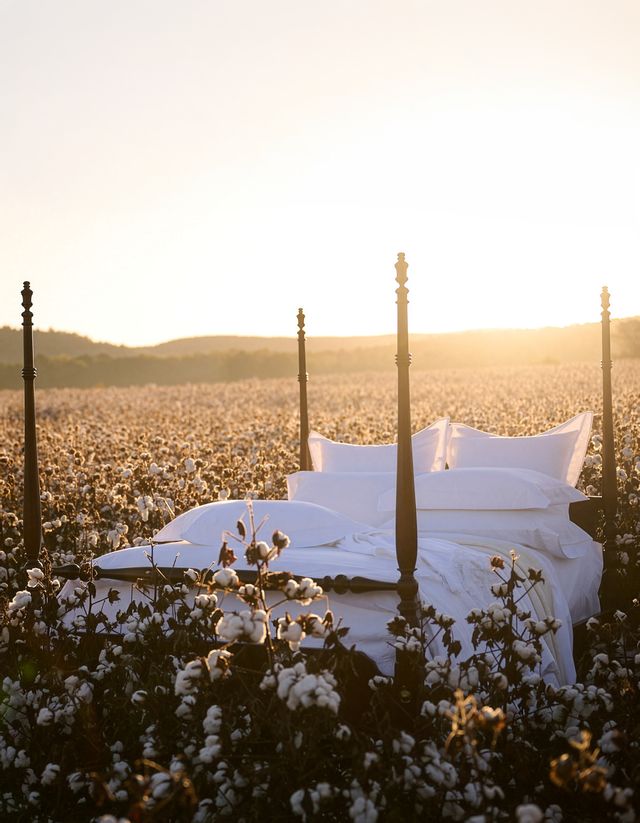
Find Red Land Cotton
Red Land Cotton products are available through the company’s website, its Amazon storefront and at its Moulton store, 1000 County Road 213, Moulton, Alabama.