
🟣 The Purple Paint Law in Alabama: What You Need to Know
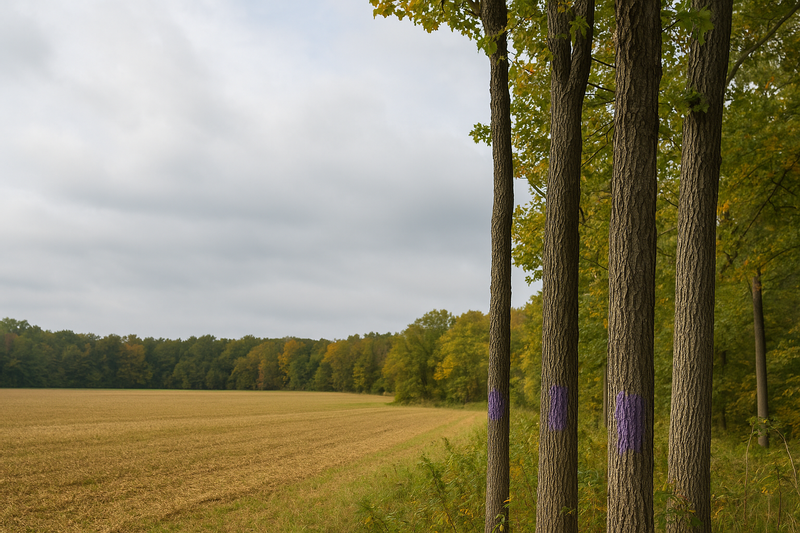
Did you know that in Alabama, a stripe of purple paint can be just as powerful as a "No Trespassing" sign? It's true—and it’s all thanks to the state’s Purple Paint Law, an efficient and legal way for landowners to mark their property and protect their rights.
Let’s break it down. 👇
🧾 What Is the Purple Paint Law?
In 2016, Alabama added a new way for landowners to legally post “No Trespassing” warnings: purple paint. This change allows property owners to use specific markings instead of traditional signage to establish legal notice against trespassers.
The law is part of Alabama Code § 13A‑7‑1, which defines how property should be marked to make criminal trespass charges valid. Landowners can now choose either:
-
"No Trespassing" signs, or
-
Purple paint marks—as long as they follow the state’s requirements.
✅ Paint Marking Requirements
To be legally recognized, purple paint marks must meet the following criteria:
-
Size: At least 8 inches long and 1 inch wide
-
Height: Placed between 3 and 5 feet from the ground
-
Visibility: Clearly visible to anyone approaching the property
-
Spacing:
-
No more than 100 feet apart in forested land 🌲
-
No more than 1,000 feet apart in open land 🌾
-
These markings are intended to be unmistakable and consistent with property boundaries.
⚖️ What Happens If Someone Ignores the Markings?
If someone enters land marked correctly with purple paint, it’s legally treated as knowingly trespassing. This means:
-
The property owner can take legal action.
-
Trespassers could face misdemeanor or felony charges, depending on the circumstances (such as repeated offenses or property damage).
So yes—the paint alone holds legal weight.
🎯 Why Use Purple Paint Instead of Signs?
Advantages:
-
Harder to remove or destroy than signs
-
More cost-effective for large rural areas
-
Blends into natural surroundings while still being legally effective
Disadvantages:
-
Not everyone recognizes what it means
-
May be hidden by vegetation
-
Could be confusing if multiple landowners use similar markings
💡 Tip: It’s still a good idea to use both signs and paint for maximum clarity and protection.
📍 Best Practices for Landowners
-
Use high-quality outdoor paint designed to withstand the elements.
-
Keep clear property surveys to avoid marking areas you don’t own.
-
Inspect regularly and repaint as needed to maintain visibility.
-
Consider marking gates, fence posts, or prominent trees to ensure visitors can’t miss them.
🧭 A Final Word
The Purple Paint Law gives Alabama landowners a powerful tool to safeguard their property. By following the guidelines, you can enforce your rights with a simple stripe of paint—no nails, no signs, just a brush and a plan.
So, if you're looking to protect your land and make sure visitors stay where they’re supposed to, grab that purple paintbrush. 🎨💪
Originally posted by Lake Wedowee Life magazine via Locable5.0 (1 Review)
Lake Wedowee Life magazine
104 W Broad Street
Wedowee, AL 36278
256-403-7528
www.LakeWedoweeLife.com