Growing Traditions in Cherokee County
Meet the Farmers and Makers Keeping Alabama's Roots Alive
By Leisel Caldwell
Sponsored by Cherokee County Chamber of Commerce
From golden fields of cotton to the sweet scent of fresh strawberries, Cherokee County offers more than just scenic drives—it offers stories. Stories of resilience, legacy, and the kind of hometown hospitality that makes you feel like you’ve been part of the family all along.
In the rolling hills and fertile fields of Cherokee County, Alabama, a quiet revolution is growing—rooted in heritage, powered by innovation, and sustained by the steady hands of families who’ve worked the land for generations.
"We Do More With Less"
Rich Lindsey, Cherokee Gin & Cotton Co.
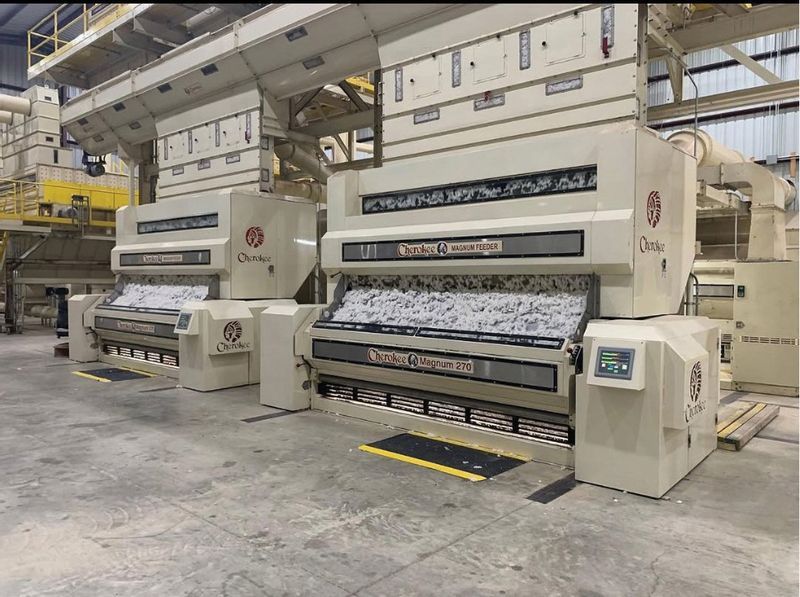
Just east of Centre sits a marvel of modern farming infrastructure: Cherokee Gin & Cotton Company, one of Alabama’s leading cotton gins. Run by Rich Lindsey, a fifth-generation farmer, the facility is more than a business—it’s the physical embodiment of family legacy and rural resilience.
“In 2018, we built a brand-new, state-of-the-art cotton gin—one of only two new gins built in Alabama that year,” Rich says. “That transition from a facility built in the 1950s to something fully modern totally revolutionized our operation. It allowed us to serve a much larger customer base in a more timely manner.”
Key to that transformation was the integration of the Kelley Electric GinManager system. “It basically doubled our capacity using the same amount of labor,” Rich explains. “We tied every piece of machinery together, collected real-time data, and streamlined the entire flow of cotton.”
For the past six years, Cherokee Gin has been the largest producing cotton gin in Alabama—a testament to both forward-thinking strategy and community relationships. But like most things in agriculture, success hasn’t come without challenges.
“Cotton is a global commodity,” Rich explains. “Prices are significantly below the cost of production right now. Input costs have skyrocketed since COVID, and many farmers are either retiring or scaling back. It’s a tough year.”
Still, the Lindsey family keeps pushing forward. “Our farm is bigger than it’s ever been—close to 4,000 acres—but we’re having to do more with less. We’re using technology to maintain the same workforce we had 15 years ago. I’m fortunate to come from a family dedicated to the land.”
Faith, Family & Farming Adventures
Kent & Kaye Dyer, Angel Farm Venue & Rocky Hollow Pumpkin Patch
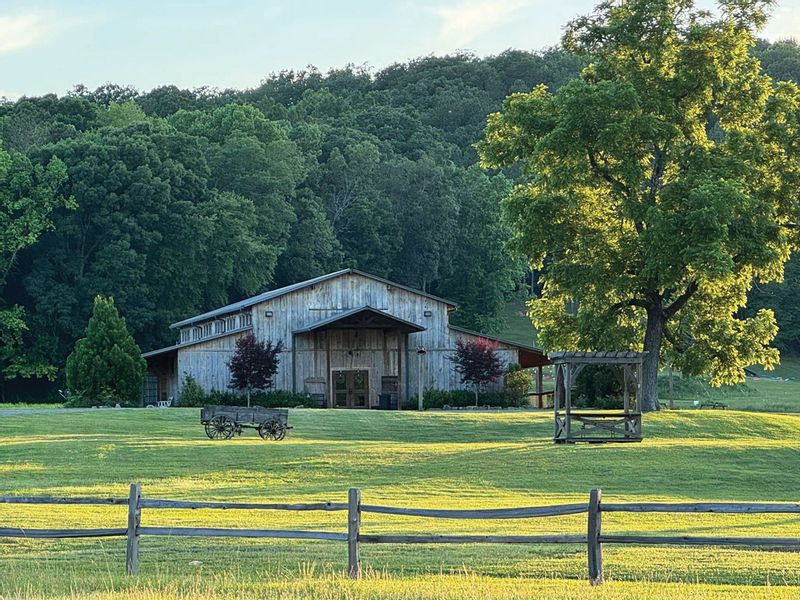
Tucked in the rolling hills on the Alabama–Georgia line is a farm where love, heritage, and hands-on learning come together in the most joyful way. Welcome to Angel Farm Venue and Rocky Hollow Patch, where Kent and Kaye Dyer have spent the last eight years building more than barns—they've built a destination.
“We never really planned to do this,” laughs Kaye. “We bought my grandfather’s property at auction after it passed through the family. We were retired, wondering how we’d pay it off, and it just turned into an adventure.”
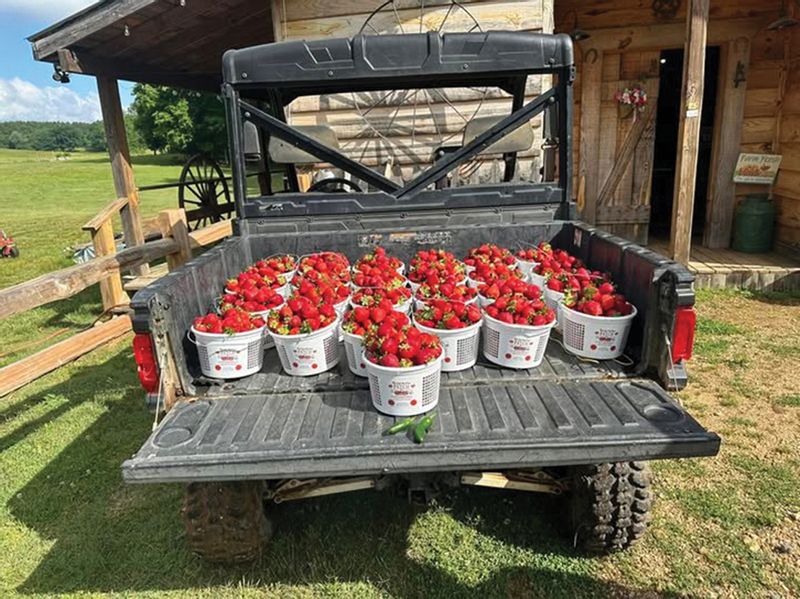
Since 2018, that adventure has included weddings, strawberry picking, a pumpkin patch, petting zoo, field trips, and most recently—quinceañera celebrations.
“We had no idea about quinceañeras until one of our helpers asked if her daughter could host one here,” Kaye recalls. “She explained the whole tradition—the religious ceremony, the last dance with the father before her wedding someday—it was so beautiful. We were honored to host it.”
That’s the kind of spirit that fills Angel Farm. The land, which spans both Georgia and Alabama, greets guests on the Cave Spring side and leads them over a creek—via a covered bridge Kent built himself—into Cherokee County.
“You don’t even have to change seats,” Kent jokes. “You can sit in Georgia and sip cider in Alabama.”
Kent, a builder and farmer by heart, has constructed nearly every structure on the property—including that picturesque covered bridge, which sits atop a converted semi-truck trailer.
“It was cheaper than steel,” he says with a grin, “and it turned out just how we wanted—vintage and authentic.”
Their venue barn hosts weddings, birthdays, showers, and corporate events, while their Rocky Hollow Patch brings in schoolchildren for lessons on the lifecycle of pumpkins and strawberries. Kaye, a retired schoolteacher, sees the farm as an extension of her classroom.
“We want kids to experience what I took for granted growing up—baby calves, tractor rides, and seeing food grow in the dirt,” she says. “It’s about education, but also about making memories.”
Now Sweet Grown Alabama members, Kent and Kaye are looking toward future seasons with hopes of adding peach trees, blackberries, and even Christmas events. “We say we’re remote, but that’s part of the charm,” says Kaye. “We’re a family farm in two states, built on faith, hard work, and a whole lot of joy.”
Grit and Grace on the Family Farm
John Bert East, East Farms – Pollards Bend, Cherokee County
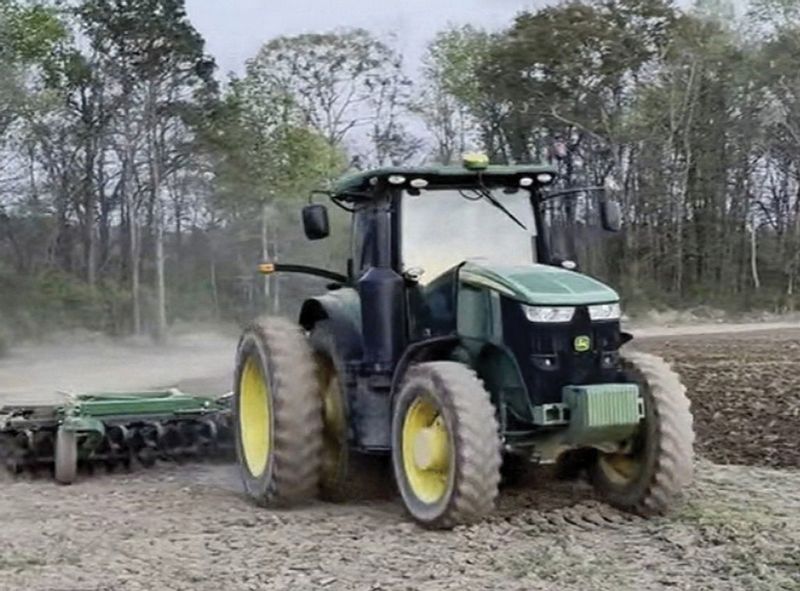
In the quiet bend of Cherokee County, where the fields stretch wide and the sky meets pasture, you’ll find East Farms—a family-run operation that represents the heart and grit of Alabama agriculture. Farmer John Bert East tends nearly 2,000 acres, including row crops, pastureland, and woodland. It’s a life rooted in hard work, legacy, and perseverance.
John Bert, who currently serves as president of the Cherokee County Farmers Federation and has served on the state board, knows both the pride and pain of farming in Alabama.
“The Alabama Farmers Federation is vital to rural Alabama,” he says. “They support farmers with insurance, advocacy, and resources. It’s an honor to represent Cherokee County.”
Despite a lifetime of love for the land, this year has been particularly challenging.
“With today’s commodity prices and the cost of putting a crop in the ground, I don’t see how farming is sustainable unless prices improve. Honestly, if we don’t see an increase soon, everybody’ll just be broke.”
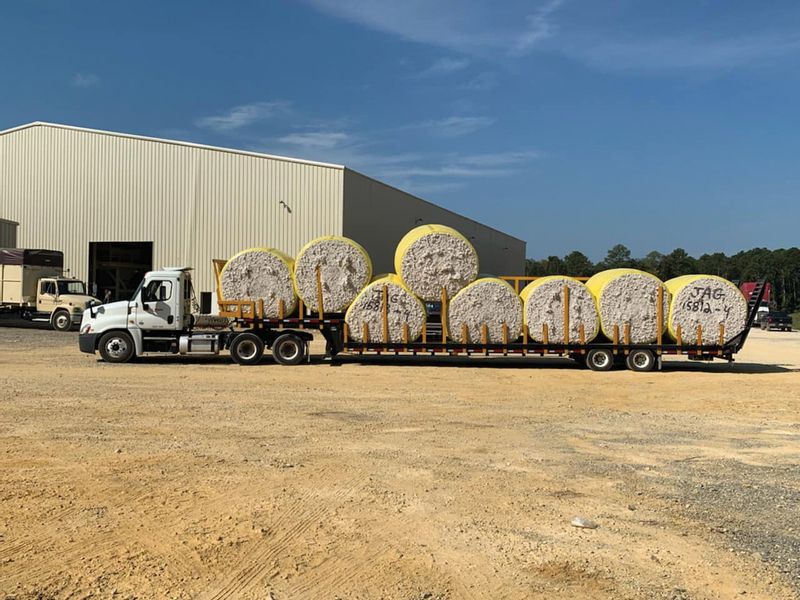
He’s not exaggerating. Only 17,000 acres of cotton were planted in the county this year—less than half the usual 42,000. That’s a major drop, especially in a county that typically produces 90,000–95,000 bales of cotton.
“This kind of decrease affects everybody—the cotton gin, the chemical co-ops, the byproducts we depend on. The entire farming economy in the area feels it,” he explains.
East Farms currently grows crops on about 1,200 acres and manages 400 acres of pasture, but spring rains and flooding have been relentless.
“About 50% of Cherokee County didn’t even get planted this year because of the wet conditions. I’ve only got half a crop myself. It’s gonna be a tough year.”
And yet, John Bert keeps going—more for legacy than profit.
“If you’ve got farming in your blood, that’s all you want to do. But I worry that today’s struggles are pushing the next generation away. A lot of young folks have seen the hardship and are choosing a different path.”
Still, he holds on to hope. His grandson is showing interest in the land, and like so many farmers before him, John Bert is doing what he can to weather the storm for the sake of the soil, the family, and the future.